
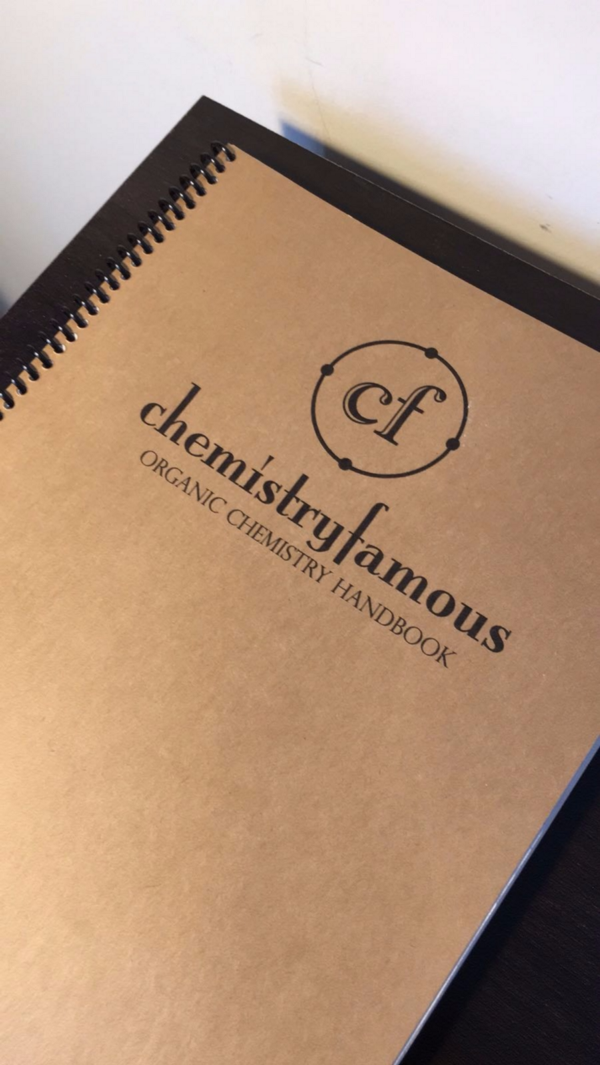
I designed and built a product for organic chemists and students called the Organic Chemistry Handbook.
In my previous story, I wrote about how I grew a niche Instagram page around chemistry from 0–20K followers in 1 year.
I decided it was time to start advertising my own products. A few ideas came to mind (phone cases, tshirts, and popsockets), but I started with the notebook. It’s classy.
“The path to understanding your customers is through understanding yourself” — Me
99.9% of my online purchases are through Amazon. Not only that, but 100% of those 99.9% of online purchases is through Amazon Prime.
As soon as I see that blue checkmark, they’ve got my trust and I’m ready to throw my money at them.
It’s obvious; If I really wanted the best accessability, I needed to sell through Amazon Prime.
Easier said than done.
I’ve sold plenty of items on eBay. It takes me 90 seconds to create an ad. Amazon is not the same. To sell on Amazon, there are a few things to consider:
Fulfillment
Fulfillment, in terms of selling on Amazon, means the following: Amazon holds your product in their warehouses. They do the packaging and shipping. They handle the customer service. All you have to do is give them a cut of the profit. If you subscribe to Amazon Fulfillment, your product will have the trusted blue checkmark and your sales will inevitably increase significantly.
The cut depends on how easy it is for Amazon to handle your product, and that usually varies with its weight and volume.
Each of my notebooks costs 75 cents to produce. I plan to sell each one for $12.99. Since my product is small and practically weightless, Amazon will take $2.50 from each sale. I’m happy to pay $2.50 to have them take care of the nitty gritty and buy myself more time to create more product.
For your product, you need to go here and check how much Amazon Fulfillment will cost you per sale.
Goddamn Barcodes
The unexpected hurdle.
Amazon is not Craigslist
To have your item listed on Amazon, it needs to be legit. By legit, I mean you need to have product identifiers: Barcodes, ISBNs, etc. I should have seen this coming, to be honest.
A year ago, you could just buy a reel of barcodes off some Russian website and use those to register your product on Amazon. This route does not work anymore.
There are 2 remaining options
- Register and protect your brand with a Trademark
Based on my research, this can cost roughly $400 in Canada. It’s costs like these that fall into the upfront costs of starting a business, and it can be enough to completely demotivate someone from progressing with their idea.
Once trademarked, you provide Amazon with the appropriate documentation and they will provide you with the product identifiers.
To me, this route seems the most logical if you’re going to be selling many products under the same brand or company in the future.
- Buy barcodes through GS1
You can buy packs of barcodes from the official Amazon-recognized manufacturer: GS1.These can be costly, but may be a cheaper alternative depending on your profit margin and how much product you intend to sell.
Conclusion?
This is Stage One. It’s likely that I’m going to get my brand (chemistryfamous) trademarked before my notebooks show up on Amazon. Stage Two of this series will take you through the nitty gritty of getting “trademarked”, and how to progress from there.
If everything goes to shit, there’s always Etsy.
 Welcome!
Leave a comment