Hello! My name is Ramis. I'm an Internal Medicine resident physician. I have a background in Biology and Biotechnology from the University of Toronto, but completed my medical education in the States. On this page, I write about my experiences in biotechnology and medicine, among other things. I'm passionate about mentoring, so connect with me through any of the avenues below if you want to get in touch!
It has been a long, long while since I last wrote (August 22nd, 2018). It’s almost exactly two months later, and I have a few updates about the program.
Since the last post, the next semester has started. The second semester is completely business-focused; There is not a single laboratory course! In the last two months, I have been enrolled in a few courses:
Biotechnology in Medicine, taught by Dr. Jayson Parker
Effective Management Practices taught by Dr. Ann Armstrong
Fundamentals of Managerial Concepts, taught by Dr. Kevin Yousie
Biopartnering, taught by Dr. Jayson Parker
Biotechnology in Agriculture, taught by Dr. Duncan Jones
An Overview
Biotechnology in Medicine (#1) was great. You learn everything about the industry in a fast-paced and engaging series of lectures. Dr. Jayson Parker is a great speaker and knows how to captivate an audience. The course had guest lecturers from the industry give talks about their area of expertise. We were even given the opportunity to have lunch with them after class! Overall, a lot was learned. We had a major project throughout the course where my team and I had to develop a business plan for the commercialization of a brain-scanning device and present it to the patent holder at the Toronto Western Hospital!
The Biopartnering (#4) course takes place every Tuesday evening from 6-8 PM, where speakers from the industry give talks about timely topics in their industry.
In Fundamentals of Managerial Concepts (#3), we’ve been learning about financial statements. After the midterm, we’ve switched to learning about financial ratios used to assess business health.
Biotechnology in Agriculture (#5) is obviously all about the agriculture industry within the biotechnology sphere. Dr. Duncan Jones is also a great professor, albeit very unique from Dr. Jayson Parker (who is himself quite the character!).
Internships
Throughout this whole process, we’ve had to apply for internships with our resumes, cover letters, and interviews. In the week-long break after the completion of Biotechnology in Medicine, we gave interviews at pharmaceutical companies in the GTA.
In my next post, I’ll discuss the application process and some of the strategies I used to establish a career direction and secure my internship! I get the results back this Monday, October 22nd at 12:00 PM…
Etsy is cheaper for smaller stores, and provides an avenue for organic exposure through their discovery system. It was a win-win-win; I saved money, got brand exposure, and made more sales.
The chemistryfamous handbooks have now been sold in over 20 countries
Since the beginning, my plan was to usethe profits from my online store to purchase a Trademark for chemistryfamous or UPC codes for the Organic Chemistry Handbook, which would allow me to list them on Amazon’s marketplace.
Long story short, it was way, way, way easier than that.
The Process
As it turns out, Amazon allows for GTIN Exemptions that will allow you to list products from private brands (AKA — not trademarked) that don’t have barcodes for their products — chemistryfamous is a private brand in this regard.
I filled out the GTIN Exemption paperwork and sent it to Amazon along with some information about chemistryfamous and the handbook. Within 24 hours, they approved my GTIN Exemption request and I was able to list my handbook on their marketplace.
The next step was to apply for Amazon FBA — Fulfillment By Amazon. FBA is essentially an arrangement where you ship your products to an Amazon warehouse and they will send the product(s) to your future customers and provide customer service in exchange for a small commission.
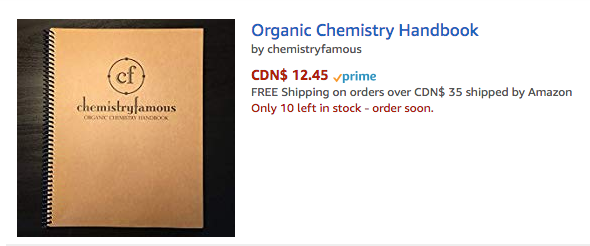
This process was also insanely simple. With the flick of a switch in my Amazon Seller Dashboard, I had enabled FBA on my handbook and was prompted to set up the shipment to their warehouse. I mailed 10 handbooks to the Amazon warehouse in Brampton, Ontario, and my notebooks are now available through Amazon Prime in Canada.
Country
I had to decide whether I wanted to list my products on the United States or Canadian Amazon marketplace. With the current arrangement, the handbook is listed in both marketplaces but is only available via Prime in the Canadian store because shipping the handbooks in bulk to the United States’ warehouses would cost much more than it would to ship them to the warehouse in Brampton given that I live in Toronto. I will definitely consider implementing Prime in the States in the near future.
Pictures
I have to take more professional photos of the handbook with a white background and all. Amazon has a high standard for presentation, so you have to meet their aesthetic requirements.
Pricing
Lastly, I had to adjust the price of the notebook from $14.45 to $12.45 USD. The reason for this is that if you sell through Amazon, you cannot sell personalized products. On my Etsy store, you can buy the handbook with your name printed on the front cover. Obviously, I can’t offer those same customization options with Amazon, so I lowered the price to a more affordable $12.45.
The Future
Shops
At this point, my notebook is now available on Amazon US, Amazon CA, and Etsy. In the future, I may consider re-opening my Shopify store if I see it being feasible. The more shops — the better, in my opinion. It just allows for more avenues of discovery.
Social Media, Advertising, Automation
I’ve been paying a lot of attention to expanding my breadth on social media.
Pinterest: Since chemistryfamous was born (September 2016), I did not post any content to Pinterest. I recently realized that Pinterest could be an attention goldmine for me because the content is natively in picture-form. So, I uploaded every single chemistryfamous infographic to Pinterest by hand and used an online applet software (IFTTT) to share chemistryfamous posts from Instagram to Pinterest automatically.
Twitter: Same deal — chemistryfamous had zero presence on Twitter since its inception two years ago. I used the same online applet software (IFTTT) to share my Instagram posts on Twitter automatically.
Facebook: I linked my Facebook chemistryfamous page to the Instagram page, such that whenever I post on Instagram it will automatically appear on my Facebook page, too. Also, I’ve started learning how to optimize Facebook and Instagram advertisements on Facebook’s Ad Manager using YouTube tutorials. As it turns out Etsy has their own Facebook Pixel, so there is potential for extremely targetted advertisements.
Building the Product Line
At this point, I’ve got the notebook business pretty refined. I’ve got the pricing, manufacturing, shipping and everything else figured out. Now, I’ve added jewelry to the product line! Jewelry will open up an entire cohort of consumers who are into science and chemistry, but who aren’t in chemistry classes, so they won’t necessarily buy my notebooks.
Jewelry is a great product to offer because it’s very cheap and easy to ship. I need to recruit models to model the jewelry, and I need to take high-quality professional photos of the products, too. Like I’ve said time and time again, aesthetics are everything.
I make one post on Instagram and I’m simultaneously covering 4 social media platforms (Instagram, Facebook, Twitter, Pinterest) thanks to automation.
The targeted paid advertisements through Facebook & Instagram bring attention to my store(s) from audiences who are (temporarily) unaware of chemistryfamous.
The jewelry product line will attract an entire cohort of consumers that I could not previously market to — women who are interested in science and chemistry, but who did not need the notebook.
Looking Forward
The next installment of the articles will discuss the success of the Amazon Debut, the jewelry product line, as well as new exclusive additions to the chemistryfamous store!
I understand that if you’re reading this blog, there’s a good chance that you’re someone who’s contemplating joining the MBiotech program and is curious about the inner details.
For your benefit, I will walk you through the coursework I completed as part of the first semester. Throughout every course (excepting BTC2000) you are working with your group, which is six total and decided randomly by the program administrators. Your grade for each course is heavily composed of group assignments and presentations, with a minority being determined by individual work.
Be prepared to work as a team member.
The summer semester of the MBiotech program is lab-heavy, and in fact, it is the only lab-based semester in the entire program. For those of you who joined MBiotech for the business education, these are four months that you’re going to have to shut up and grind through.
With that being said, business, real-life, every day practical education is intertwined with the lab education.
BTC1700: Molecular Biology Laboratory
BTC1700 is your introduction to the lab education you’ll be receiving in the summer. There are two lab courses, of which this is the first one. Your team will be given a project to complete in one month. The project involves cloning a protein, and meeting a set of deliverables.
You will learn a lot, and very quickly in this course. Along with the task of completing this project, there are competitions, prizes, games, challenges – you name it. The syllabus is heavily decorated with activities that make the month an engaging experience. Your team will work together to complete this science project, but will also need to keep track of your finances; Your team is given X amount of Lab Cash which you are to use to complete the project. You will need to manage your material purchases, fines, winnings from competitions, payments from other groups, equipment purchases, interest accumulated, and so forth. Members of your group will take on unique roles to manage the many moving pieces during this time – It’s an extremely collaborative experience.
Groups will get into arguments. Contracts will be made and signed. Groups will take other groups to court (yes, there is an MBiotech court – a simulation ofcourse, albeit a good one). Money will be lost. Money will be won.
BTC1700 was an immersive experience.
BTC1710: Biomaterial Protein Chemistry Theory
Biomaterial Protein Chemistry Theory is a class-based course. In this course, you will be invited to listen to guest lecturers. You will learn in incredible detail the molecular details of pharmaceuticals. You will be completing written assignments regarding pharmaceuticals. Most importantly, you will be listening to and delivering many presentations from and to your peers, respectively. In this course, you will learn to be a good presenter, and manage your time in preparing these presentations and developing your own style in which to deliver them. At the end of the course, your team will give a large presentation in downtown Toronto to your peers, program administrators, and real venture capitalists.
BTC1720: Biomaterials Laboratory
The Biomaterials Laboratory course is the second of two lab courses in the summer semester. This course is similarly laid out as BTC1700, except that instead of one large project, your team is given 4 small projects over 4 weeks. You will learn and develop new skills, since the modules are quite interesting and engaging. Further, the director of the program, Mr. Leigh, always adds his own twist to the course to make it a more entertaining experience much in the same way as he does with BTC1700.
BTC1810: Biotechnology & Drug Manufacturing
In Biotechnology & Drug Manufacturing, you will learn a huge amount of information pertaining to the biotechnology industry. It is all-encompassing. All I can say is that I found it to be very interesting once information starting coming together. Also, you’ll be presenting in this course too.
BTC2000: Effective Management Practices
I can’t write much about Effective Management Practices because I was unfortunately unable to attend the majority of the classes, but I can confidently say that is a course based on teaching you how to effectively manage and collaborate with your colleagues.
I am glad to have reached the August 2-week holiday. It was much deserved, and much needed. I’m using this time to work on my other projects, such as this website, chemistryfamous and internship preparations (see my post: Internships?). In September, the business courses will begin and I’ll have more updates about those when the time comes. Until then,
MBiotech stands for the Master of Biotechnology. It’s a graduate program at U of T that combines business and science education to produce professionals that are capable of florishing in the pharmaceutical and biotechnology industries. It’s a relatively new program, having only been around about 15 years at the time of this post, but has garnered a solid reputation in the professional sphere.
I started the program in May of this year (2018), because I’ve got a strong interest in business and drugs (pharmaceuticals!), and I want to spend my time being involved with both in a way that doesn’t involve becoming a drug dealer…
All jokes aside, so far it has been a great experience and I’m really looking forward to managing the development of drugs from their early clinical trial stages up to the point where they’re in your family physician’s sleeve.
My internship starts in January 2019, and I’m excited to document the process.
After doing some research and crunching some numbers, I came to understand the costs and time required to have my own products listed on Amazon’s marketplace. As a follow-up to Stage One, I developed a concise “bottom-up strategy” to obtain a trademark – which I’ll outline below.
In my previous post, I explained that to sell your own unique products on Amazon, you need to either purchase UPC barcodes or have your brand registered by obtaining a trademark.
Brand Registry Route
Cost: $450 (one-time payment)
Timeline: 10–18 months for paperwork processing
UPC Barcode Route
Cost: $250 (one-time payment +$50/year after the first year)
Timeline: Instant
You’ll quickly realize that the cost of entry for Amazon is steep, so I continued researching…
Shopify
Shopify is a completely different platform than Amazon. You get your own online store, you ship your own products, and you handle customer service.
Cost: $40/month (+ $20/year for your domain name)
Timeline: Instant
A Comparison
Let’s consider how much each route will cost over 3 years (Y1–Y3).
The brand registry (trademark) route is better in the long run (5+ years) because it’s a one-time payment.
The UPC barcode route is best in the medium to long run (1–5 years).
Shopify is best for the short term (<1 year), because the cost of entry is very low.
The Business Plan
I don’t want to invest my own money into Chemistryfamous, so I’ll work my way up from the bottom:
The best course of action seems to be to start with Shopify, then purchase UPC barcodes, and then register my brand with a trademark.
Step One: I will use the money Chemistryfamous generates from advertisements to fund the Shopify online store for up to 4 months ($180).
Step Two: I’ll use the profits from my sales on Shopify to purchase UPC barcodes ($250), at which point I’ll discontinue my Shopify subscription and sell my notebooks on Amazon’s marketplace.
Step Three: I’ll stick with that setup until I can use the profits from my sales on Amazon to purchase the trademark. After the paperwork has been processed, I’ll discontinue my UPC barcode $50/year subscription.
Once my brand is registered, I won’t need to make any monthly or yearly payments and I’ll be able to place an unlimited number of my business’ products on Amazon’s marketplace.
Conclusion
I’ve opened a Shopify online store. The next article(s) will discuss the progression from Step One through to Step Three.
I’m anticipating roadblocks along the way; These projects are never clear-cut, but that should make for good content.
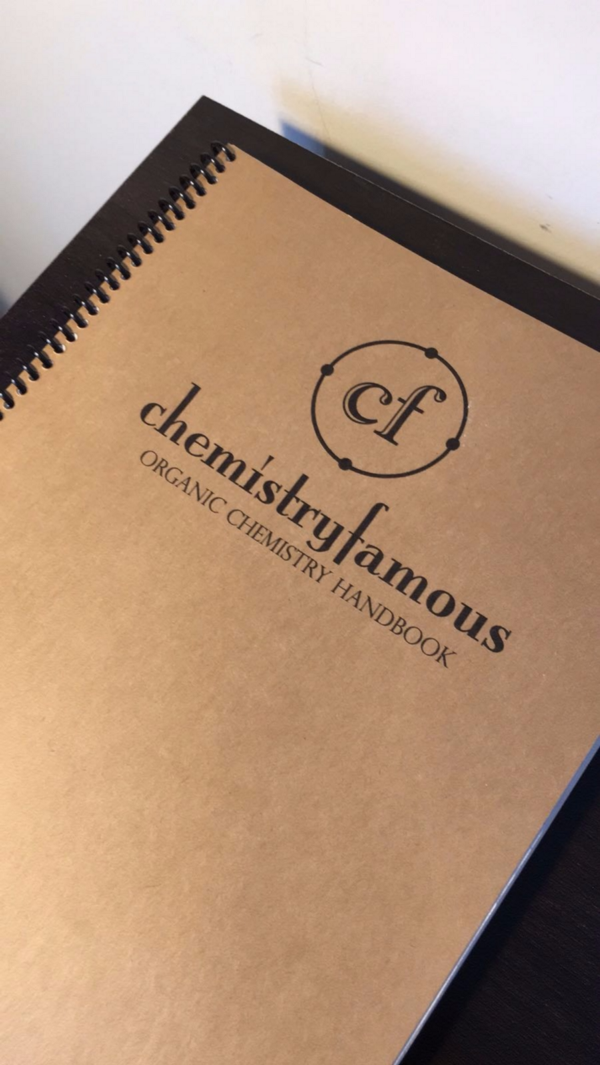
I designed and built a product for organic chemists and students called the Organic Chemistry Handbook.
In my previous story, I wrote about how I grew a niche Instagram page around chemistry from 0–20K followers in 1 year.
I decided it was time to start advertising my own products. A few ideas came to mind (phone cases, tshirts, and popsockets), but I started with the notebook. It’s classy.
“The path to understanding your customers is through understanding yourself” — Me
99.9% of my online purchases are through Amazon. Not only that, but 100% of those 99.9% of online purchases is through Amazon Prime.
As soon as I see that blue checkmark, they’ve got my trust and I’m ready to throw my money at them.
It’s obvious; If I really wanted the best accessability, I needed to sell through Amazon Prime.
Easier said than done.
I’ve sold plenty of items on eBay. It takes me 90 seconds to create an ad. Amazon is not the same. To sell on Amazon, there are a few things to consider:
Fulfillment
Fulfillment, in terms of selling on Amazon, means the following: Amazon holds your product in their warehouses. They do the packaging and shipping. They handle the customer service. All you have to do is give them a cut of the profit. If you subscribe to Amazon Fulfillment, your product will have the trusted blue checkmark and your sales will inevitably increase significantly.
The cut depends on how easy it is for Amazon to handle your product, and that usually varies with its weight and volume.
Each of my notebooks costs 75 cents to produce. I plan to sell each one for $12.99. Since my product is small and practically weightless, Amazon will take $2.50 from each sale. I’m happy to pay $2.50 to have them take care of the nitty gritty and buy myself more time to create more product.
For your product, you need to go here and check how much Amazon Fulfillment will cost you per sale.
Goddamn Barcodes
The unexpected hurdle.
Amazon is not Craigslist
To have your item listed on Amazon, it needs to be legit. By legit, I mean you need to have product identifiers: Barcodes, ISBNs, etc. I should have seen this coming, to be honest.
A year ago, you could just buy a reel of barcodes off some Russian website and use those to register your product on Amazon. This route does not work anymore.
Based on my research, this can cost roughly $400 in Canada. It’s costs like these that fall into the upfront costs of starting a business, and it can be enough to completely demotivate someone from progressing with their idea.
Once trademarked, you provide Amazon with the appropriate documentation and they will provide you with the product identifiers.
To me, this route seems the most logical if you’re going to be selling many products under the same brand or company in the future.
You can buy packs of barcodes from the official Amazon-recognized manufacturer: GS1.These can be costly, but may be a cheaper alternative depending on your profit margin and how much product you intend to sell.
Conclusion?
This is Stage One. It’s likely that I’m going to get my brand (chemistryfamous) trademarked before my notebooks show up on Amazon. Stage Two of this series will take you through the nitty gritty of getting “trademarked”, and how to progress from there.
I actually don’t know why I created chemistryfamous. I wanted to start an Instagram page, and the first thing that came to mind was to create an online molecular gallery. I’d never seen anything of the sort, and thought it would be an interesting project.
Deciding on a name
During my junior year as an undergraduate, I built a website called “99 Problems but Orgo Ain’t One” to help students perform better in Organic Chemistry I & II. As the website accrued hundreds of hits, I was consequently becoming ‘famous’ among my fellow classmates.
My favorite moment was when I was buying textbooks at the university bookstore. The cashier asked for my student ID (as required) and then said “Oh! You’re Ramis, you built the chemistry website, right?” I replied, “Yeah, you’re in my class?” She said “No, I’m not in chemistry, but I heard about you through some friends”.
In light of these events, my roommate at the time, Escobar, suggested I call the Instagram page ‘chemistryfamous’.
It was a name that was easy to remember, looked slick, and rolled off the tongue nicely. I ran with it.
Phase One: Getting The Ball Rolling
I. My first followers
I would follow a few hundred people and wait for them to follow me back, then purge them all. A cheap, time-consuming, and extremely boring process.
II. Ideas
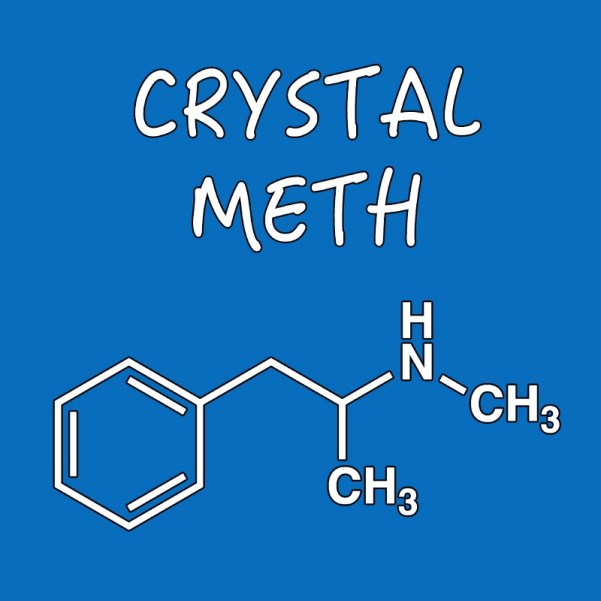
In the early stages, I would create images about anything that interested me (and most people, in fact): Cocaine, THC, Nicotine, Meth, and things of that nature.
III. My first posts
Extremely basic. Looking back, I’d even say they were cringey. No information, tacky color themes, little effort. I was proud of them at the time, though. Take a look:
IV. Hashtags
At this primitive stage, I used a small list of unrefined hashtags. I didn’t know how important it was to have strategic hashtags at the time. How things have changed…
V. Presentation
I pulled a random image of an atom off Google Images and used it as my logo:
My biography had only my personal IG handle: “@ramisnazir”
Phase Two: Things Get Interesting
I. Pharmacies
About three months after the creation of chemistryfamous, I ran out of ideas to post about. I had gone through all the popular, extremely well-known compounds and came to what felt like a dead-end.
I happened to be in a pharmacy while thinking about what to do with chemistryfamous. Lucky me, because the next month’s content was practically lying in front of me at CVS. I took pictures of the ingredients in a ton of medications at the pharmacy.
From that point forward, I would ‘farm’ ideas from ingredients labels on food, medicine, drinks, cleaning supplies — anything that had a label, pretty much.
Sometimes, I would come across compounds in my coursework. I would create their infographics, which would help me study for the course while also creating content. I love to hit two birds with one stone.
II. From pictures to infographics
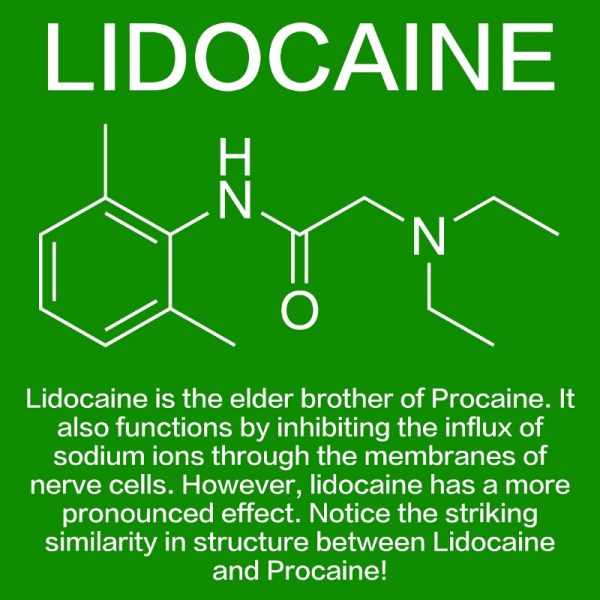
I started adding information to my posts — a decision that has been instrumental to chemistryfamous’ success. Take a look at some of my earliest infographics:
III. Organic followers
A few weeks later, I had reached one thousand followers — a huge accomplishment. After crossing that barrier, I finally started to get organic followers (people that naturally find your page and follow you out of pure interest), and immediately stopped with the ‘follow & unfollow’ strategy I was using in Phase One.
IV. Hashtags
I started utilizing a full set of thirty hashtags. I still hadn’t refined the list, though. Slowly getting there…
Phase Three: Getting Serious
I. Outsourcing the work
About five months in, I started to call on my followers to give me suggestions for content. Not only did they love giving recommendations, but it made my life easier — I did not have to constantly conjure up new ideas, and my content would always be curated to what the people wanted.
Whenever I created an infographic around someone’s suggestion, I gave them a shoutout in the description of the post. This built follower loyalty and appreciation, and also turned chemistryfamous into a community.
To this day, I still rely on suggestions from my followers. Now, I have to use a list on Excel to keep track of them all!
II. Organic followers
Until I reached about 15K followers, I did nothing to “feed” my follower count. It was completely ‘au naturale’.
III. Post optimization
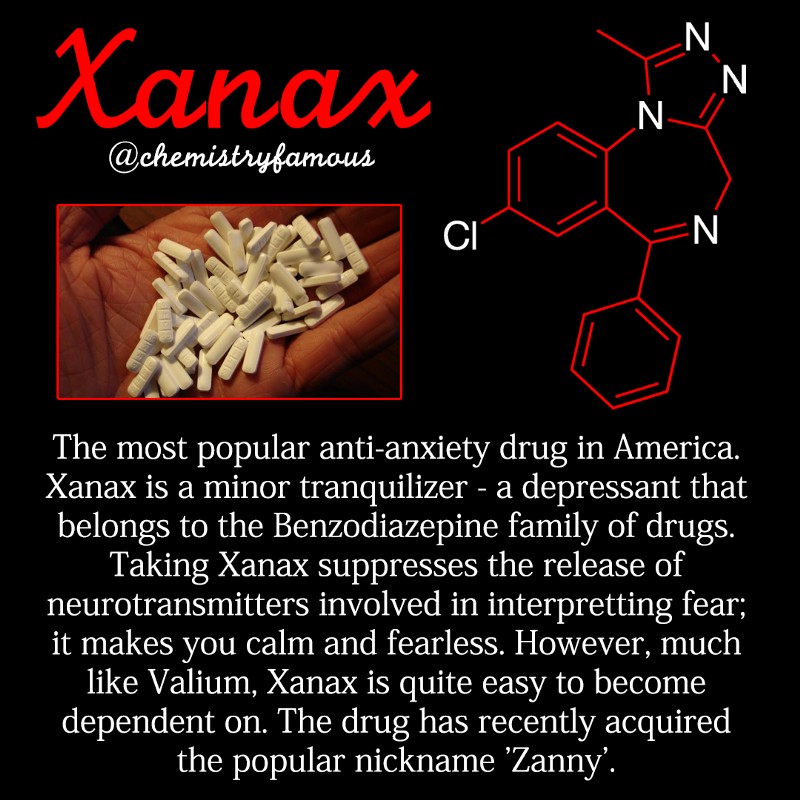
I began experimenting with the appearance of my posts. I asked myself questions like: Should I use a background image or keep it as a color? How many lines of text should be in the picture? What size font should I use? Should I use the same font for each post? Should I include an image of the pill, or the medication bottle, or just stick to the molecular structure? Should I include “@chemistryfamous” somewhere in each picture? You get the point.
I ironed out all the kinks.
Today, I stick to colored or textured backgrounds. Nothing fancy, or distracting. I want the molecular structure and the textual information to to be the main focus of my images. I sometimes experiment with borders and colored text for the sake of aesthetics.
I write enough information so that 35–50% of the image is textual real-estate, at most. I make an effort to maintain 9 lines of text in each infographic, but not more; I learned that after 9 lines of text, you get diminishing returns. The text must also be large enough so that it can be easily read on smartphones. Accessibility is everything.
I always use the “@chemistryfamous” tag in every infographic, because people often share my infographics on their own pages without giving due credit.
I avoid using extremely scientific or technical terms in my text. Chemistryfamous is supposed to be for everyone, and not only for chemists. I’ve had a lot of fun finding a balance where newcomers can understand the information and advanced chemists are still able to learn a thing or two.
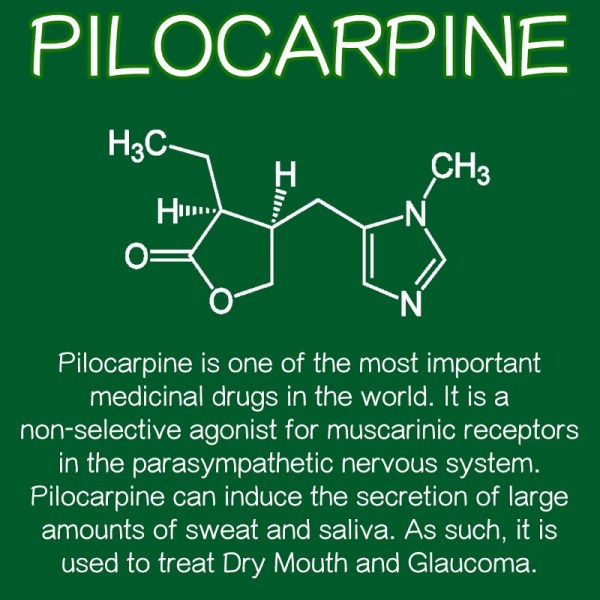
Take a look at my more recent infographics:
IV. Hashtags
I became serious about my use of hashtags. I created an Excel spreadsheet where I keep lists of hashtag sets that differ in the popularity of each hashtag. See below:
I engineered my main hashtag list so that I had a healthy combination of large, medium, and small hashtags. I found that this recipe gave me the greatest exposure. I’m currently experimenting with other hashtag sets that are top-heavy, bottom-heavy, and so on.
V. Presentation
I changed my logo to something a little more vibrant:
Also, I lengthened my biography to this:
Phase Four: $$$
I. Presentation
The first thing I did in Phase Four was design a custom logo to give my page that premium aura.
First impressions are everything:
I decided to completely cut out my biography so that the people who visited my page would be exposed to more of my content without having to scroll past a block of text that no one reads anyways.
We rate people as attractive or not in half a second on Tinder. I believe Instagram works the same way; you have a finite number of seconds to convince a new visitor to stay, and that isn’t going to happen if the first thing they see are sentences instead of your compelling content.
That’s just my opinion though.
II. $1.80
The $1.80 strategy is a technique I discovered online. It involves going to the top nine posts within ten hashtags, and leaving your ‘2 cents’ (i.e. a comment) on each of them.
This strategy will net you followers because IG often displays the comments from larger accounts underneath photos, while hiding comments from weaklings 😉
Users will click on your handle when they see your comment, and that might convert into a follow. I’ve been experimenting with this strategy a little bit in Phase Four.
III. Monetization
As I approached the 20K mark, I started aggressively marketing for small businesses and large companies.
There are two ways that I’ve monetized chemistryfamous:
Affiliate programs
Advertise a product and make commission on each sale.
2. One-time-payments
The business pays a one-time fee to advertise their product on your page, but you do not make any commission.
I started with #1, and quickly realized I was making peanuts for the amount of work I was putting in to create the advertisements and for ‘littering’ my feed with them.
I switched to #2, and made the businesses responsible for providing the visual content that would be the basis of the advertisement. It was at this point that I started generating a steady revenue stream from chemistryfamous.
The #2 approach is especially useful because it allows you to be compensated for the followers that the business’ page would receive, even if no sale was made!
IV. The Elevator
Instead of pulling the money out of chemistryfamous to buy myself expensive drinks at Starbucks (which I did in the beginning, mind you), I spent it all on advertising chemistryfamous on even bigger pages.
I’ve made connections with admins of IG pages with hundreds of thousands of followers, and I often pay them to put my infographics on their feeds and stories. This method has netted the greatest number of followers in the shortest amount of time, by far.
The Future
I will make another case study once I reach the 50K mark, and once again at the 100K mark.
Thank you for reading, and I hope this has been useful.














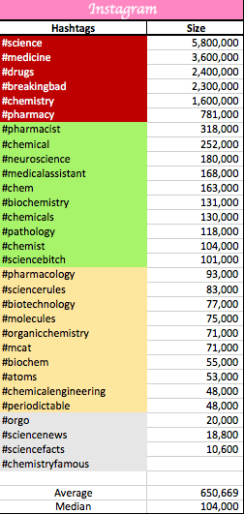 I engineered my main hashtag list so that I had a healthy combination of large, medium, and small hashtags. I found that this recipe gave me the greatest exposure. I’m currently experimenting with other hashtag sets that are top-heavy, bottom-heavy, and so on.

 Welcome!